
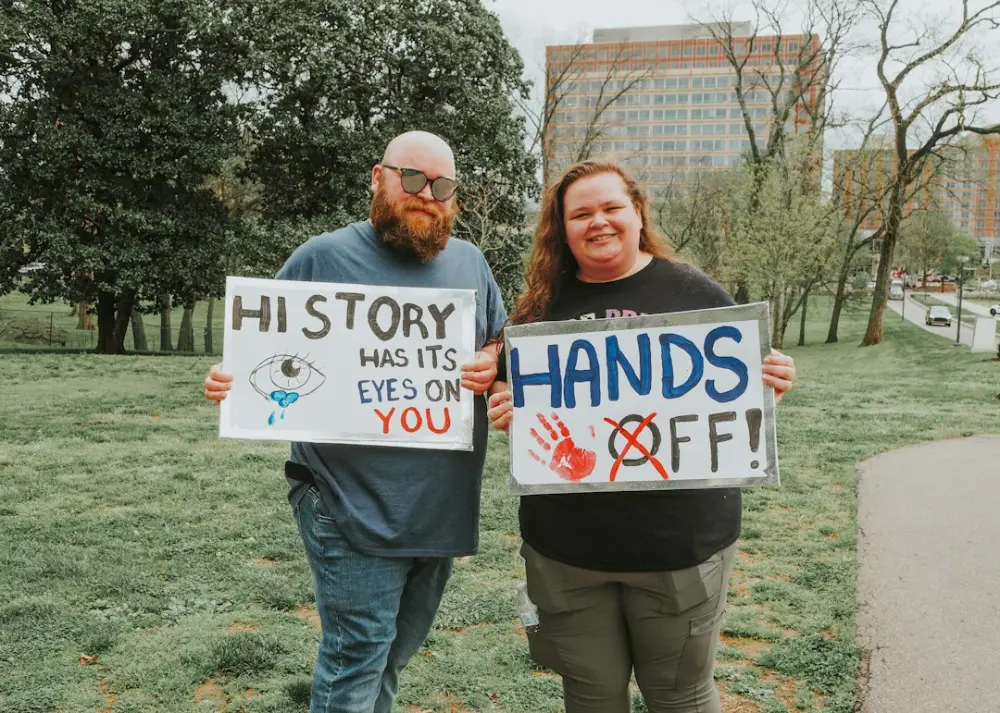
Sharing local history accessibly means ensuring that historical records, artifacts, and narratives are available to everyone, regardless of their physical or cognitive abilities. This involves implementing inclusive digital design, ADA-compliant physical spaces, and diverse storytelling methods to remove barriers, allowing every community member to engage fully with their shared heritage and local past.
Moving beyond basic preservation, accessibility requires a shift in how researchers and local organizations present their findings. It is not enough to store a document in an archive or upload a scan to a website; the information must be structured so that a screen reader can interpret it, a person with limited mobility can reach it, and a non-specialist can understand its significance.
What is Accessible Local History?
Accessibility in the context of local history is the practice of removing the physical, digital, and intellectual gates that prevent people from interacting with their community's story. While traditional archiving focused on the survival of the material, modern community research prioritizes the use of that material. For example, a local historical society might have a collection of 19th-century property deeds. In an accessible framework, those deeds are not just photographed; they are transcribed into searchable text and summarized in plain language to explain how they impacted neighborhood development.
This approach also considers sensory needs. A tactile map of a 1920s town center allows individuals with visual impairments to understand the scale and layout of their neighborhood in a way a flat photograph cannot. By diversifying the formats in which we present data, we ensure that the "local" in local history truly includes every resident. This inclusive mindset helps prevent the gatekeeping of information, making heritage a shared asset rather than a niche academic pursuit.
Principles of Inclusive Historical Storytelling
Inclusive storytelling focuses on how narratives are constructed and who can digest them. One primary principle is the use of multi-modal formats. If a project relies solely on long-form academic essays, it excludes younger audiences, individuals with certain cognitive disabilities, and those who speak English as a second language. Instead, successful projects often pair text with audio descriptions, video summaries, and simplified "easy-read" versions of complex events.
Consider a project documenting the closure of a local factory in 1985. An inclusive approach would include the written report, but also a recorded oral history from a former worker with a synchronized transcript. This allows the researcher to choose the format that suits their needs. Additionally, using diverse narratives means looking for the stories that haven't been the focus of mainstream reporting. When local reporting is finally uncovering the lost history of our neighborhoods, it often finds that the most compelling stories come from marginalized groups whose records were previously ignored or poorly preserved.
Digital Preservation and Web Accessibility
In 2026, the majority of historical research begins online. Digital accessibility is governed by the Web Content Accessibility Guidelines (WCAG), which provide a roadmap for making websites perceivable and operable for all. For a community history site, this means every image of a vintage postcard or newspaper clipping needs descriptive alt-text. A screen reader cannot "see" a photo of a 1910 parade, but it can read a description that says, "A black and white photo of a parade on Main Street with horse-drawn carriages and people in wool suits."
Another critical element is the use of accessible document formats. Many archives upload PDFs that are essentially just images of text, which are unreadable by assistive technology. Using Optical Character Recognition (OCR) to convert these images into real text is a vital step. This makes the documents searchable and allows users to adjust font sizes or use text-to-speech tools. For organizations managing large databases, ensuring that navigation is possible via keyboard alone—without a mouse—is a fundamental requirement for serving users with motor impairments.
Physical Exhibit Design and ADA Compliance
When history moves into physical spaces, such as libraries, pop-up museums, or community centers, the environment must accommodate all visitors. The Americans with Disabilities Act (ADA) provides specific standards, but best practices often go further. Display cases should be positioned at a height that is visible to both standing visitors and those using wheelchairs. Signage should use high-contrast colors—such as black text on a cream background—and avoid decorative fonts that are difficult to read for people with dyslexia or low vision.
Lighting is another often-overlooked factor. While low lighting is sometimes necessary to protect fragile artifacts like 19th-century textiles, it can make reading labels nearly impossible. Solutions include using motion-activated bright lights or providing high-contrast printed guides that visitors can carry with them. Incorporating tactile elements, like 3D-printed replicas of artifacts that visitors are encouraged to touch, creates a sensory experience that benefits everyone, not just those with visual impairments. These physical adjustments ensure that the local archive is a welcoming space for the entire community.
Professional Training and Educational Resources
Building an accessible history program requires ongoing education for volunteers and professional researchers. Many organizations now offer specific training modules on how to write alt-text for historical images or how to conduct inclusive oral history interviews. Utilizing resources from the Society of American Archivists or regional museum associations can provide the technical grounding needed to implement these standards. Training should not be a one-time event but a consistent part of the research process.
Small community groups can start by conducting an accessibility audit of their current offerings. This might involve testing their website with a free accessibility checker or walking through their physical space with a checklist to identify barriers. Following practical steps for community participation in heritage work often reveals that the community itself is the best resource for identifying what is missing. Engaging with local disability advocacy groups during the planning phase of a project ensures that accessibility is baked into the design rather than added as an afterthought.
Archeox: Empowering Local History Initiatives
At Archeox, the focus remains on the practical preservation of community identity through rigorous and inclusive research. We believe that local history loses its value if it is only reachable by a small segment of the population. By documenting neighborhood changes and preserving local news, we aim to build a repository that is as diverse as the communities it represents. Accessibility is not just a technical requirement in 2026; it is a core component of ethical historical practice.
Archeox supports initiatives that prioritize neighborhood reporting and the recovery of overlooked narratives. When we share our local history accessibly, we ensure that the collective memory of our streets and houses remains a living, breathing part of the present. Whether you are digitizing a personal family archive or managing a municipal collection, the goal is the same: to make the past a clear and open resource for everyone. By adopting these standards, we contribute to a more complete and honest understanding of how our communities have evolved over time.